How embroidered t-shirts Are Made: The Complete Manufacturing Process Step-by-Step
How Embroidered T-Shirts Are Made: The Complete Manufacturing Process Step-by-Step
For brands and businesses looking to elevate their apparel offerings, embroidered t-shirts represent a premium choice. The intricate stitching and sophisticated aesthetic of embroidery lend an air of quality and durability that screen printing or direct-to-garment methods often can't match. Understanding how are embroidered t-shirts made is crucial for first-time buyers, sourcing managers, and brand owners who demand precision and excellence in their custom apparel. This comprehensive guide breaks down the entire manufacturing process, from initial design to the final product, offering clarity on the journey of your custom t-shirts.
At Gold Garment, a leading t-shirt manufacturer based in Ho Chi Minh City, Vietnam, we pride ourselves on transparent and efficient production. Our expertise in OEM, ODM, and private label services, coupled with a low MOQ of 100 pieces and factory-direct pricing, makes us an ideal partner for businesses worldwide. We offer a detailed look at the t-shirt production process, ensuring you know exactly what goes into creating your high-quality embroidered garments. For a deeper dive into our capabilities, explore the detailed guide at Gold Garment t-shirt production.
1. Design and Digitization: The Blueprint for Embroidery
The journey of an embroidered t-shirt begins long before any fabric is touched. It starts with the design. Clients typically provide artwork, logos, or specific graphic elements they wish to see on their t-shirts. This artwork is then translated into a digital format that embroidery machines can understand. This critical step is called digitization.
Vectorization and File Preparation
High-resolution vector files are preferred for their scalability and clean lines, which are essential for intricate embroidery. If a client provides raster images (like JPEGs or PNGs), our design team will often vectorize them to ensure the highest quality output. This process involves converting the image into a series of mathematical paths, allowing for crisp reproduction at any size.
Embroidery Digitizing
The core of this stage is translating the artwork into a series of stitch commands. A specialized software is used to map out stitch types, densities, angles, and thread colors. The digitizer must understand the limitations and strengths of embroidery, ensuring the design is not too complex to be stitched effectively on fabric. This includes considering the number of stitches, the underlay required for stability, and the overall visual impact.
2. Material Selection and Preparation
The choice of fabric significantly impacts the final look and feel of an embroidered t-shirt. At Gold Garment, we offer a wide range of high-quality t-shirt blanks to suit various needs and budgets.
Fabric Choices
Common materials include 100% cotton, cotton blends (like cotton-polyester), and performance fabrics. Cotton is breathable and soft, making it a popular choice. Blends can offer enhanced durability and wrinkle resistance. The fabric's weave and weight are also important considerations, as they affect how the embroidery sits and how the t-shirt drapes.
Pre-Shrinking and Washing
To prevent shrinkage after embroidery and washing, many manufacturers, including us at Gold Garment, pre-shrink the fabric. This involves washing and drying the fabric rolls before cutting. This step is crucial for maintaining the t-shirt's intended size and shape throughout its lifespan, ensuring a consistent fit for all units in an order.
3. Cutting the Fabric
Once the fabric is prepared, it's time to cut it into the various pieces that will form the t-shirt. This stage requires precision to ensure all components fit together perfectly.
Pattern Making and Lay Planning
Based on the approved t-shirt style and sizes, patterns are created or adjusted. These patterns are then laid out onto the fabric rolls in an optimized manner, known as lay planning. This process aims to maximize fabric utilization, minimizing waste and reducing production costs.
Automated Cutting
Modern garment factories often employ automated cutting machines. These machines, guided by digital patterns, can cut through multiple layers of fabric with exceptional accuracy and speed. This ensures consistency across all pieces and significantly speeds up the production timeline.
4. The Embroidery Process: Bringing Designs to Life
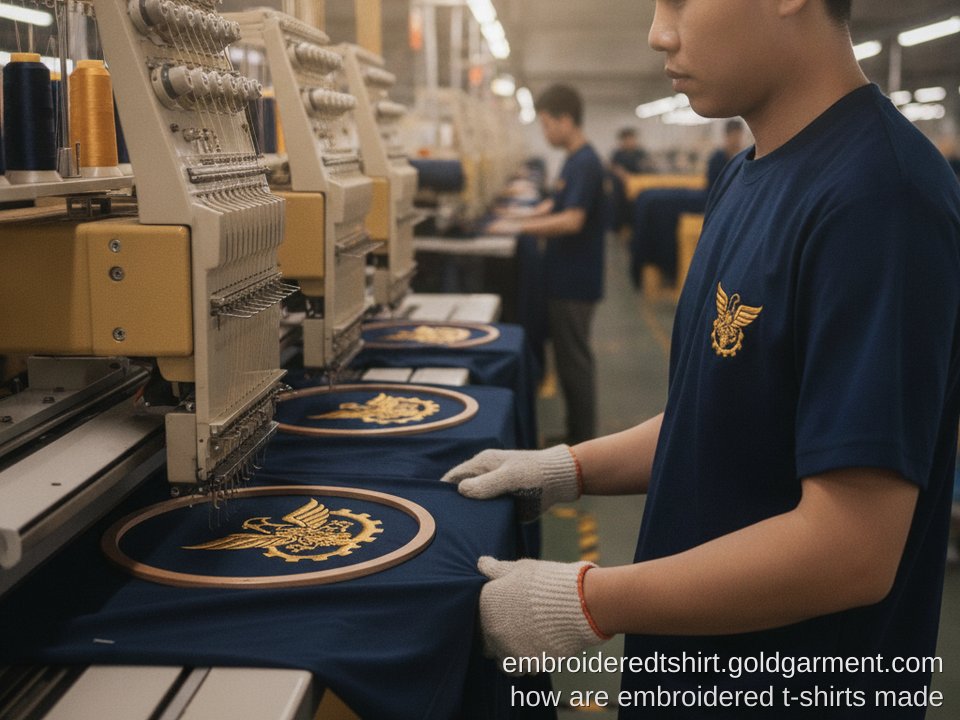
This is where the magic of embroidery truly happens. The digitized design is transferred to automated embroidery machines, which meticulously stitch the design onto the fabric.
Hooping and Stabilizing
Before stitching, the fabric panel (usually the chest or sleeve area where the embroidery will be placed) is secured within an embroidery hoop. A stabilizer, a material that provides a firm backing to the fabric, is often placed underneath. This prevents the fabric from stretching or distorting during the high-speed stitching process, ensuring a smooth and defined embroidery.
Machine Embroidery
The hooped fabric is then loaded into an industrial embroidery machine. The machine follows the instructions from the digitized file, precisely guiding the needle and thread to create the design. Modern machines can handle multiple colors and complex patterns, automatically changing threads as needed. This is a key part of garment manufacturing steps that differentiates embroidered items.
Thread Selection
High-quality embroidery threads, typically made of polyester or rayon, are chosen for their strength, sheen, and colorfastness. The thread weight and type are selected based on the design's complexity and the desired finish. We understand the importance of using durable, vibrant threads that will withstand washing and wear.
5. T-Shirt Assembly: Constructing the Garment
With the embroidery complete on the individual panels, the next step is to assemble these pieces into a finished t-shirt.
Sewing Panels Together
Skilled technicians use industrial sewing machines to join the cut fabric pieces. This includes sewing the front and back panels, attaching the sleeves, and constructing the neckline. The seams are reinforced to ensure durability, especially in high-stress areas.
Hemming and Finishing
The bottom hem of the t-shirt and the sleeve cuffs are then sewn. Finally, the neckline is finished, often with a ribbed collar for a comfortable and classic look. All loose threads are trimmed, and the garment begins to take its final shape.
6. Quality Control: Ensuring Perfection
Quality assurance is paramount at every stage, but a final inspection is critical before the t-shirts are deemed ready.
Inspection Points
Each t-shirt undergoes a thorough inspection. This includes checking the embroidery for any missed stitches, thread breaks, or incorrect color application. The garment itself is inspected for proper stitching, accurate sizing, fabric defects, and overall construction quality. We meticulously check for any imperfections to ensure our clients receive only the best.
Pressing and Folding
Once approved, the t-shirts are pressed to remove any wrinkles and give them a crisp, professional appearance. They are then carefully folded, ready for packaging. This attention to detail ensures that the product presented to the end consumer is of the highest standard.
7. Packaging and Worldwide Shipping
The final step is preparing the embroidered t-shirts for their journey to clients around the globe.
Packaging Options
T-shirts can be packaged individually or in bulk, depending on client requirements. Options may include polybags, custom hangtags, or specialized packaging for retail-ready presentation. We work with clients to meet their specific branding and distribution needs.
Global Logistics
Gold Garment, operating from Ho Chi Minh City, Vietnam, has extensive experience in international shipping. We work with reliable logistics partners to ensure timely and secure delivery to destinations across the USA, Europe, Australia, and Southeast Asia. Our factory-direct pricing and understanding of international trade facilitate a smooth and cost-effective sourcing experience. For businesses seeking a reliable embroidered t-shirts factory Vietnam, our capabilities are well-documented, as demonstrated by Gold Garment corporate t-shirt manufacturer Vietnam.
Frequently Asked Questions
Q: What is the minimum order quantity (MOQ) for embroidered t-shirts?
A: At Gold Garment, our MOQ for embroidered t-shirts is typically 100 pieces per style. This allows us to offer competitive factory-direct pricing while catering to businesses of various sizes.
Q: Can you handle complex or multi-colored embroidered designs?
A: Yes, our advanced digitization process and state-of-the-art embroidery machines are capable of handling complex designs with multiple colors. We ensure each stitch is precisely placed for a high-quality finish.
Q: How long does the manufacturing process typically take?
A: The production timeline varies depending on the order size and design complexity. However, our efficient processes and experienced team at Gold Garment aim to complete orders within a reasonable timeframe, ensuring timely delivery.
Q: What types of t-shirts can be embroidered?
A: We can embroider on a wide range of t-shirt styles and fabrics, including cotton, blends, and performance materials. The suitability of embroidery often depends on the fabric weight and weave, which we can advise on.
Understanding the intricate steps involved in creating embroidered t-shirts highlights the dedication to quality and precision at every stage of production.
Partner with Gold Garment for your next order and experience the difference of factory-direct quality and service.
📩 Request a Free Quote — Response Within 5 Minutes
🌎 Website: embroideredtshirt.goldgarment.com
Factory-direct pricing · MOQ from 100 pcs/style · Sample development · Worldwide shipping


Nhận xét
Đăng nhận xét