How to Design a Custom embroidered t-shirts: From Concept to Bulk Production
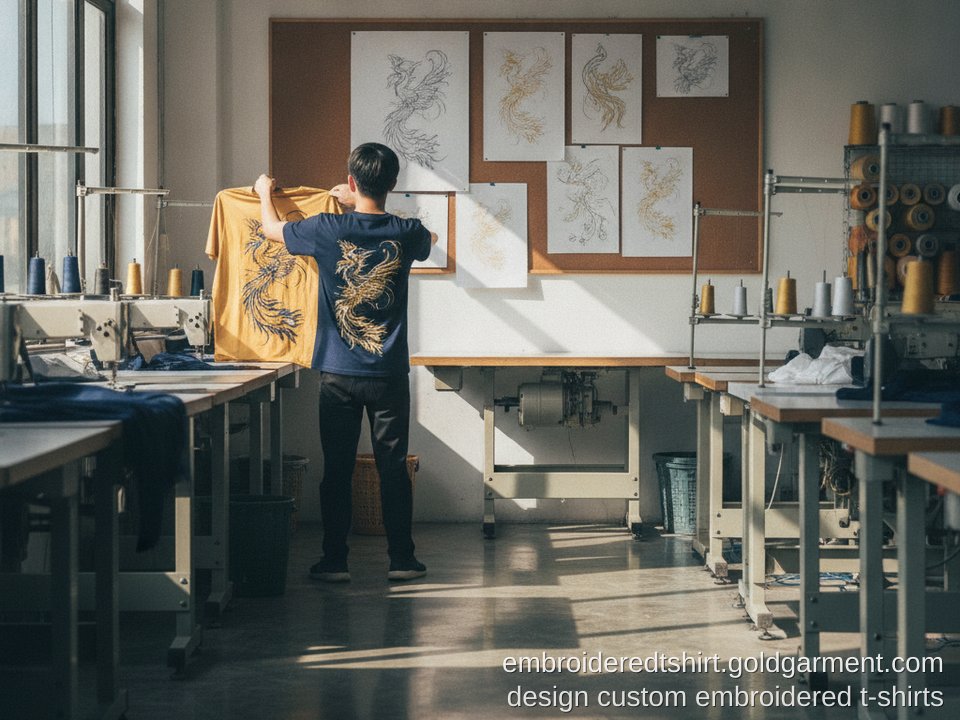
How to Design Custom Embroidered T-Shirts: From Concept to Bulk Production
For brands looking to establish a unique identity or create premium merchandise, the process of how to design custom embroidered t-shirts is a crucial first step. It's where your vision transforms into a tangible product that resonates with your audience. At Gold Garment, a leading t-shirts manufacturer in Vietnam, we understand that a well-executed design is the foundation of high-quality custom apparel. This guide will walk you through the essential stages, from initial concept to preparing for bulk production, ensuring your embroidered t-shirts meet your exact specifications and brand standards.
Creating compelling custom embroidered t-shirts requires a blend of creativity and technical understanding. Whether you're a startup designer or an established brand expanding your product line, grasping the design nuances is key to a successful outcome. We'll cover everything from conceptualization and artwork preparation to understanding the technical requirements that a professional manufacturer like Gold Garment needs to bring your designs to life.
1. Conceptualization: Defining Your Brand's Vision
The journey of any custom apparel begins with a clear concept. Before you even think about specific designs, define the purpose and target audience for your embroidered t-shirts. Are they for promotional giveaways, retail sales, team uniforms, or a specific event? Understanding this will influence the style, complexity, and overall aesthetic of your designs.
Consider your brand's identity. What colors, fonts, and imagery best represent your values and message? Your custom t-shirt design should be an extension of your brand's personality. Think about the overall feel you want to convey – is it playful, sophisticated, minimalist, or bold? This foundational thinking will guide your design choices and ensure consistency with your brand messaging.
Defining Your Target Audience
Who are you designing for? Understanding your demographic is paramount. Consider their age, interests, lifestyle, and aesthetic preferences. A design that appeals to a young, trend-conscious audience will differ significantly from one aimed at a corporate clientele or a niche hobby group.
Brainstorming Design Elements
Start sketching or digitally outlining your ideas. Don't be afraid to explore various concepts. Think about the placement of the embroidery – a classic left-chest logo, a bold back design, or even subtle sleeve details. Consider the size and density of the embroidery; these factors significantly impact the final look and feel.
2. Artwork Preparation: Translating Ideas into Production-Ready Files
Once you have a solid concept, the next critical step is preparing your artwork. This is where your creative vision meets the technical requirements of embroidery. High-quality artwork is essential for achieving crisp, durable, and visually appealing embroidered t-shirts.
The type of file you provide is crucial for professional embroidery. Vector graphics are generally preferred because they can be scaled infinitely without losing quality, ensuring your logo or design looks sharp at any size. Common vector formats include AI, EPS, and SVG. If vector is not possible, high-resolution raster files (like PSD, TIFF, or PNG) at 300 DPI or higher can also be used, especially for photographic elements, though they might require more careful handling during the digitizing process.
Understanding the nuances of custom t-shirt artwork file requirements is vital. For embroidery, this often involves digitizing your artwork, which is the process of converting a flat image into a format that an embroidery machine can read, specifying stitch types, directions, and densities. This is a specialized skill that professional manufacturers handle.
Vector vs. Raster Graphics
Vector graphics are created using mathematical equations and are ideal for logos and designs with clean lines. They are scalable without loss of resolution. Raster graphics, on the other hand, are composed of pixels and are better suited for complex images or photographs but can become pixelated when enlarged.
Color Separation and Pantone Matching
Embroidery machines use specific thread colors. It's important to specify your desired colors using a standardized system like Pantone. This ensures color accuracy and consistency across different production runs. Your manufacturer will often work with you to select the closest available thread colors if your exact Pantone isn't in stock.
File Formats and Resolution
Always aim for the highest possible resolution for raster files (300 DPI at the intended print size). For vector files, ensure all fonts are outlined or converted to curves to avoid font substitution issues. Common accepted formats include .AI, .EPS, .PDF, .CDR, .SVG, .JPG, .PNG, and .PSD. Always check with your manufacturer for their specific preferred file types.
3. Understanding Embroidery Specifications and Tech Packs
For any serious endeavor in custom apparel, a well-defined embroidered t-shirts tech pack is indispensable. This document serves as the blueprint for your garment, detailing every aspect of its construction and decoration. It ensures that your manufacturer understands your exact requirements, minimizing errors and guaranteeing product consistency.
A comprehensive tech pack for custom embroidered t-shirts should include a detailed flat sketch of the garment, all design elements with precise placement and dimensions, color specifications (Pantone codes for thread), stitch types, and any special finishing instructions. This level of detail is crucial for factory-direct production, where clear communication is key to achieving the desired outcome. For a deeper understanding, refer to our Vietnam factory tech pack guide.
Key Components of an Embroidery Tech Pack
- Garment Details: Specify the t-shirt style (e.g., crew neck, v-neck, polo), fabric composition, weight, and color. You can explore various styles in our T-Shirt Styles Guide.
- Embroidery Design: Include the artwork, its exact placement on the garment (e.g., left chest, center back), dimensions (width and height in inches or centimeters), and thread color specifications (Pantone codes).
- Stitch Count and Type: While often determined by the digitizer, understanding the general density and type of stitches (e.g., satin stitch, fill stitch) can be helpful.
- Quantity and Sizing: Specify the total quantity needed and the size breakdown (e.g., S, M, L, XL).
- Special Instructions: Any unique finishing requirements, such as specific backing materials or embroidery techniques.
Digitizing Your Design
Digitizing is the process of converting your artwork into a stitch file that an embroidery machine can understand. This involves determining stitch angles, stitch density, and thread colors. A skilled digitizer can significantly enhance the quality and detail of your embroidered designs. Many manufacturers offer this service as part of their production process.
4. Choosing the Right T-Shirt Base and Fabric
The quality of your base t-shirt is as important as the embroidery itself. The fabric choice will affect the drape, feel, durability, and how well the embroidery sits on the garment. Gold Garment offers a wide range of fabric options to suit different needs and budgets, including cotton, polyester blends, and performance fabrics. Learn more about fabric choices in our embroidered t-shirts Fabric Guide.
Consider the intended use of the t-shirts. For everyday wear, 100% cotton or a cotton-polyester blend offers comfort and breathability. For athletic or performance wear, moisture-wicking polyester or tri-blend fabrics are ideal. The weight of the fabric also plays a role; heavier weight t-shirts often provide a more substantial base for detailed embroidery.
Understanding Fabric Types
Cotton: Soft, breathable, and natural. Great for everyday wear and comfortable feel.
Polyester: Durable, wrinkle-resistant, and often used for performance wear due to its moisture-wicking properties.
Blends (e.g., Tri-Blend): Offer a combination of benefits from different fibers, often resulting in a very soft, comfortable, and high-quality feel.
Fabric Weight and Durability
Heavier fabrics (e.g., 6 oz and above) tend to hold embroidery better and offer more durability. Lighter fabrics might require a lighter stitch density to prevent puckering or stretching. Always discuss fabric weight options with your manufacturer.
5. Working with a Manufacturer: From Sampling to Bulk Orders
Partnering with an experienced manufacturer is key to bringing your embroidered t-shirts design for brand to life. Gold Garment, based in Ho Chi Minh City, Vietnam, specializes in OEM, ODM, and private label t-shirt manufacturing, offering factory-direct pricing and worldwide shipping. With over a decade of experience, we serve clients across the USA, Europe, Australia, and Southeast Asia.
The first step after finalizing your design and tech pack is usually requesting a sample. This allows you to see, feel, and approve the actual product before committing to a large order. It's your opportunity to check the embroidery quality, color accuracy, garment fit, and overall craftsmanship. This iterative process is essential for ensuring satisfaction and is a core part of our OEM and private label services, as detailed in our OEM vs Private Label embroidered t-shirts Manufacturing guide.
Once the sample is approved, you can proceed with your bulk order. Gold Garment has a minimum order quantity (MOQ) of 100 pieces per style, making it accessible for both emerging and established brands. Understanding MOQs is crucial for planning your production. Learn more about this in our Minimum Order Quantity for embroidered t-shirts guide.
The manufacturing process itself involves multiple stages, from fabric cutting and sewing to embroidery application and finishing. A transparent manufacturer will keep you informed throughout. For a detailed look at what happens in the factory, explore How embroidered t-shirts Are Made: The Complete Manufacturing Process Step-by-Step.
We have a proven track record of delivering high-quality custom apparel for various businesses. For instance, a real example from Vietnam uniform t-shirt factory Gold Garment showcases our capabilities in producing professional and branded corporate wear, demonstrating our commitment to quality and client satisfaction.
Sampling and Prototyping
Always request a pre-production sample. This is your chance to verify all specifications before mass production begins. It's a critical quality control step.
Bulk Production and Quality Control
After sample approval, your order moves to bulk production. Reputable manufacturers implement rigorous quality control checks at various stages to ensure consistency and adherence to your specifications.
Shipping and Logistics
Ensure your manufacturer offers reliable worldwide shipping. Discuss shipping timelines, costs, and customs procedures to avoid surprises.
Frequently Asked Questions
Q: What is the most important factor when designing custom embroidered t-shirts?
A: The most important factor is clarity and precision in your artwork and specifications. High-quality, appropriately formatted artwork, coupled with a detailed tech pack, ensures that your vision is accurately translated into the final embroidered product.
Q: How many colors can I use in my embroidery design?
A: While there isn't a strict limit to the number of colors you can use, each color requires a separate thread spool on the embroidery machine. Using too many colors can increase complexity and cost. It's often best to simplify designs for embroidery, and most manufacturers can work with a wide palette, often matching to Pantone colors for accuracy.
Q: What is the difference between OEM and ODM for custom t-shirts?
A: OEM (Original Equipment Manufacturer) means you provide your own design and specifications, and the manufacturer produces it for you. ODM (Original Design Manufacturer) means the manufacturer offers pre-existing designs that you can customize with your branding, or they can develop a new design based on your conceptual brief. Gold Garment offers both services.
Ready to transform your brand with high-quality custom embroidered t-shirts? Let Gold Garment bring your unique designs to life with our expert manufacturing capabilities.
📩 Request a Free Quote — Response Within 5 Minutes
🌎 Website: embroideredtshirt.goldgarment.com
Factory-direct pricing · MOQ from 100 pcs/style · Sample development · Worldwide shipping


Nhận xét
Đăng nhận xét